
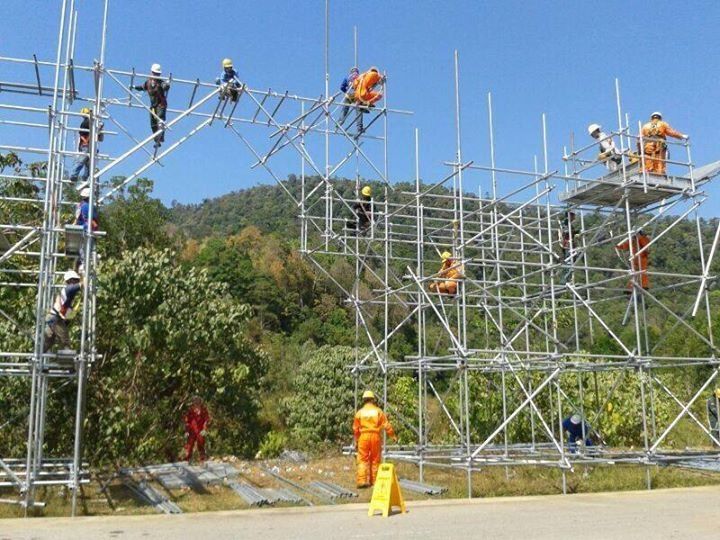
When you hear of scaffolding in construction, it refers to the lifeline of any building project that gives workers safe access to heights that are otherwise difficult to reach. As a result, selecting the right scaffolding system helps construction teams work faster, improve access, and protect workers at every stage of a project.
For example, bamboo scaffolding, steel scaffolding, and suspended systems all play vital roles on different sites. Therefore, every scaffold must remain strong, reliable, and completely hazard-free from start to finish.
In this article, you will learn more about scaffolding safety tips, the different types of scaffolding, and their uses in building construction.
What is scaffolding in construction?
In construction, scaffolding is a temporary framework designed to provide workers with a stable and secure working platform. In addition, it supports materials needed for activities such as bricklaying, painting, plastering, and repair work.
Depending on project requirements, contractors select scaffolding systems that best suit the job. However, each type offers unique advantages in strength, flexibility, cost, and ease of installation. Overall, proper scaffolding improves worker safety while ensuring smooth workflow throughout the project.
Why is scaffolding essential on a construction site?
Scaffolding plays a critical role in improving site safety. Most importantly, it reduces the risk of falls by giving workers a secure footing while working at height. At the same time, it improves efficiency by allowing the smooth movement of workers and materials.
Beyond safety, scaffolding adapts to different construction activities. Consequently, teams complete projects faster and meet required safety regulations. Nonetheless, proper scaffolding safety tips must always be followed to maintain compliance.
Different types of scaffolding and their uses.
Construction teams select scaffolding based on building height, load capacity, work type, and site conditions. Commonly used systems include single scaffolding, double scaffolding, cantilever scaffolding, bamboo scaffolding, suspended scaffolding, and steel scaffolding.
Single scaffolding
Single scaffolding is one of the simplest scaffolding systems and consists of a single row of supports. It is commonly used for brick masonry work and is placed about 1.2 meters away from the wall under construction. Manufacturers typically use bamboo or timber poles, although steel pipes may be added to improve strength.
Double scaffolding
Double scaffolding, also known as independent scaffolding, is mainly used for stone masonry work where drilling holes in walls is difficult. Bamboo or steel tubes are commonly used to provide strength and durability. For added rigidity, diagonal bracing is installed, with ledge spacing ranging from 1.2 to 1.5 meters.
Cantilever scaffolding
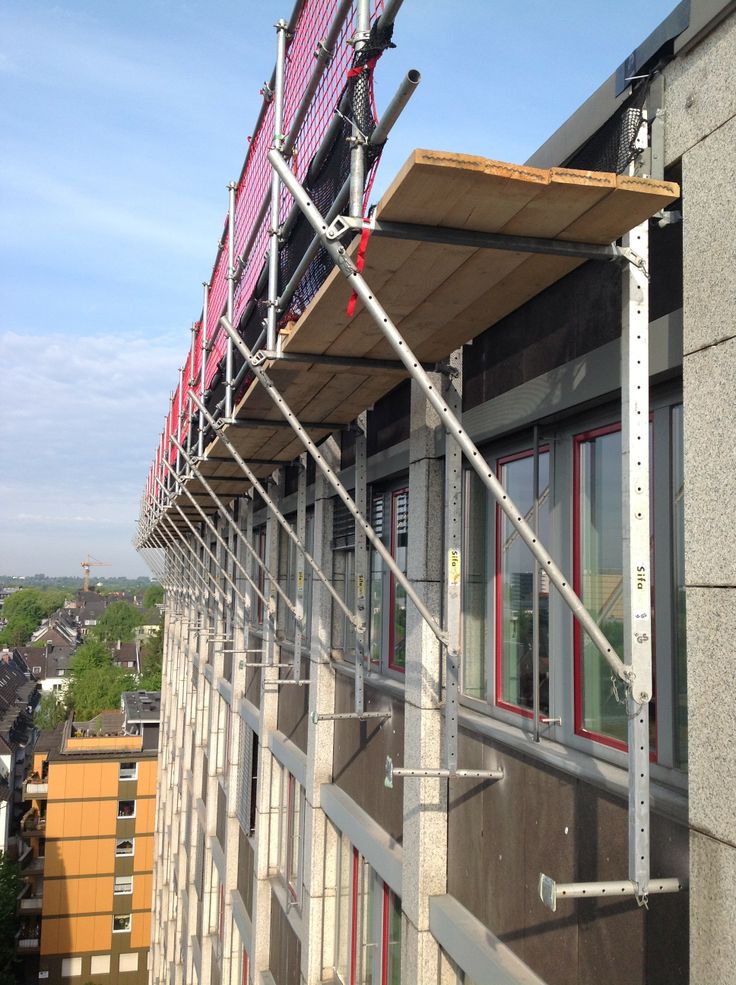
Cantilever scaffolding relies on horizontal beams called needles to support the working platform. Builders often use it over rivers, busy streets, or areas with obstacles.
Additionally, this system allows workers to construct upper floors without disturbing lower levels.
Bamboo scaffolding
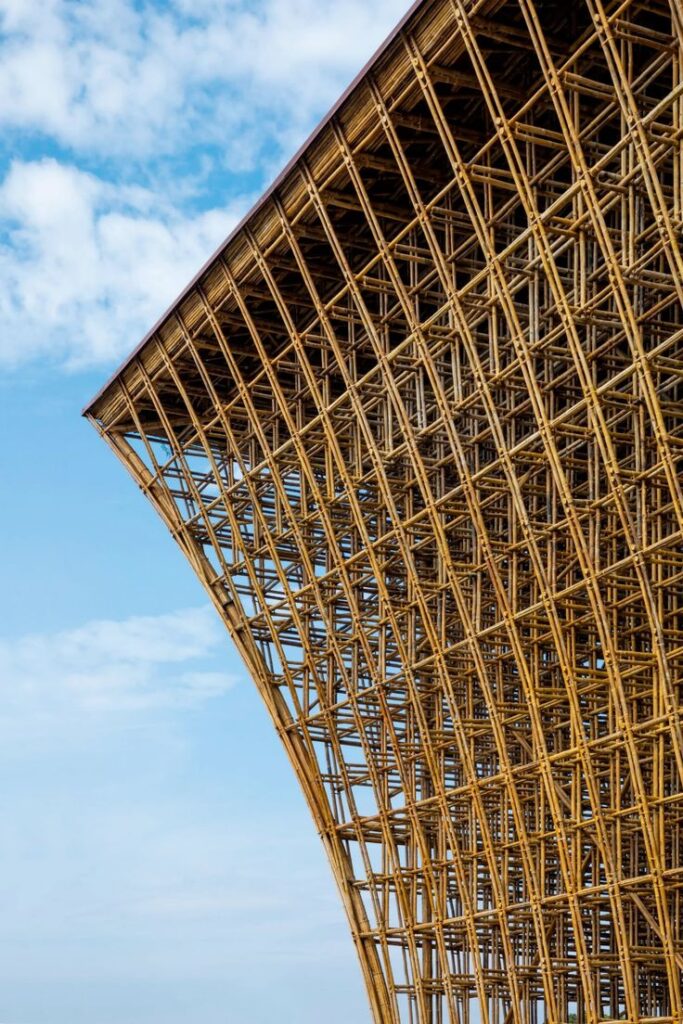
Craftsmen construct bamboo scaffolding from strong, lightweight bamboo poles. Because of its low cost, flexibility, and eco-friendly nature, builders widely use bamboo scaffolding across Asia and Africa. Contractors also apply this system to irregularly shaped buildings and varying heights.
Suspended scaffolding
Suspended scaffolding hangs from overhead structures through strong cables or ropes. Manufacturers build these systems with steel or aluminum frames and non-slip platforms to improve stability. Contractors commonly use suspended scaffolding for maintenance, painting, façade repairs, window cleaning, and other exterior works, particularly on high-rise buildings.
Steel scaffolding
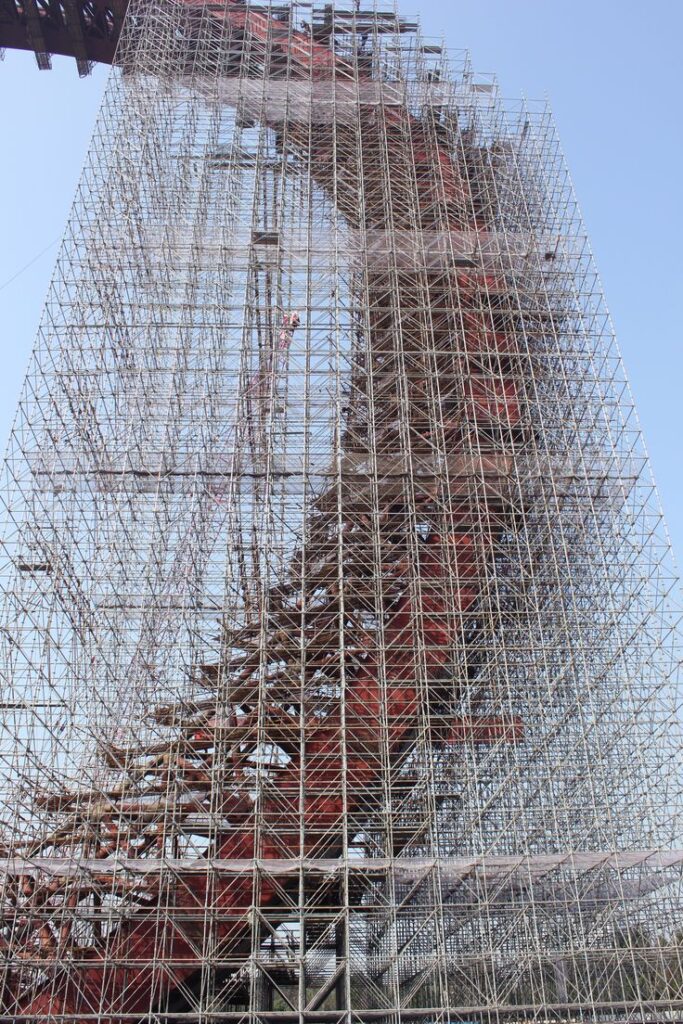
Manufacturers produce steel scaffolding from steel tubes, making it one of the strongest and most durable scaffolding systems in construction. Construction teams reuse steel scaffolding across multiple projects with minimal wear and tear. Workers can assemble the system quickly; however, skilled labor ensures proper installation.
Key scaffolding safety tips include tightening all joints securely and inspecting components for rust or damage before use.
Common scaffolding hazards and how to prevent them.
Despite their benefits, scaffolds can be dangerous if not properly installed. As a result, it is crucial to understand potential hazards. Let’s discuss these hazards and how to prevent them.
1. Falls from height
This is the most common and dangerous scaffolding accident that occurs on-site. This is due to a lack of guardrails, improper use of harnesses, or slippery surfaces. You can avoid this by
a. Ensuring all open sides have guardrails and toe boards installed
b. All workers make use of the personal fall arrest system (PFAS), such as safety harnesses.
c. Scaffolding is always clean and dry to avoid slips.
2. Scaffolding collapse
This is caused by poor assembly, overloading, or the use of damaged components, and this can be prevented by:
a. Using quality scaffolding material free from defects.
b. Assign a qualified person to inspect the scaffolding before each shift.
c. Follow the manufacturer’s guidelines for load capacity.
3. Falling tools or materials
Tools falling from scaffolding can injure the people below. It is advisable to install toeboards and debris nets. Also, to secure all tools and materials when working at height.
4. Adverse weather conditions
High winds and rain can make scaffolding unsafe. To avoid hazards, you can stick to these scaffolding safety tips, which include:
a. Conduct inspections after heavy winds or storms.
b. Use non-slip platforms and secure tarps or coverings in windy conditions.
5. Electrocution
Scaffolding made of iron or steel installed close to the power line can expose workers to electrical hazards. The best way to avoid this is by maintaining a safe distance of at least 13 feet from the power lines before work begins. You can also train workers on electrical hazard awareness.
CONCLUSION
When it comes to reaching heights safely and efficiently, scaffolding in construction is vital. The right types of scaffolding and applying the right scaffolding safety tips ensure productivity and protection on site.
If you are looking for experts who can assist you in installing scaffolding, please contact us today.


