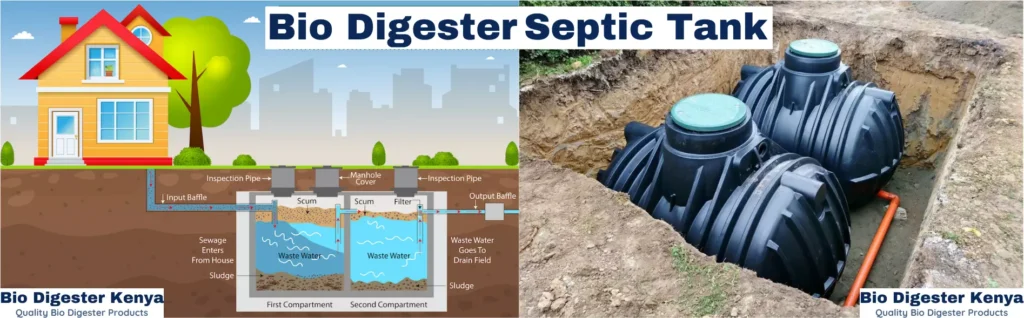
When comparing biodigesters septic tank soakaway systems, it’s crucial to understand their benefits and limitations for modern homes. Every building in Nigeria should not only be structurally sound and visually appealing but also equipped with sustainable systems when it comes to waste management. Biodigesters vs septic tank and soakaway is a crucial decision that affects not just a property’s functionality but also its environmental impact and long-term maintenance costs.
I will strongly recommend a biodigester system over a septic tank and soakaway, and the reasons for this will be discussed in this article. The practical applications for both systems, pros and cons, will also be discussed. This will help you decide which is the better choice for your residential home, commercial buildings, or real estate investment.
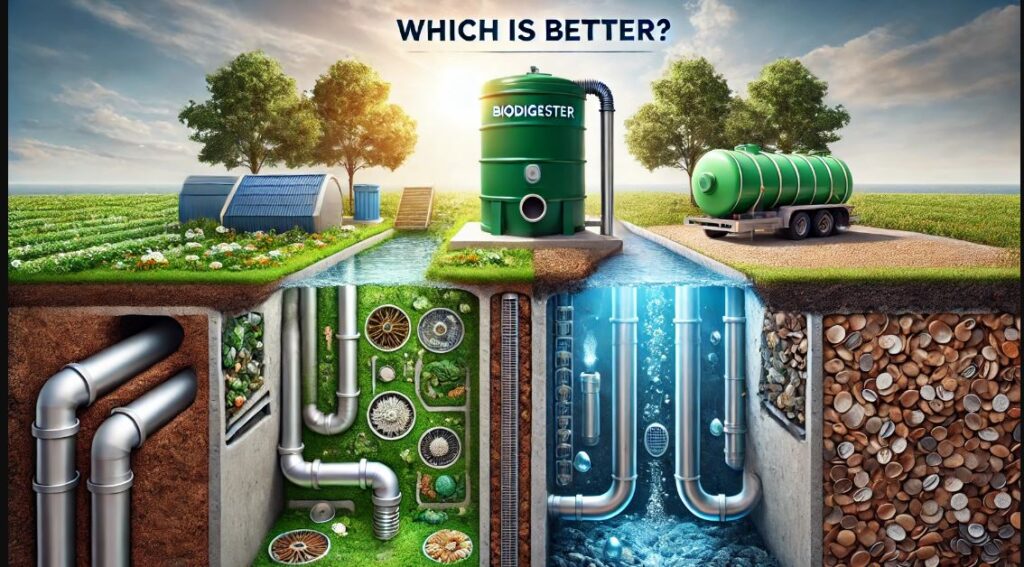
The practical applications of biodigesters vs septic tanks & soakaways.
Choosing an option between a biodigester and a septic tank with a soakaway depends on factors such as property size, location, waste volume, and environmental considerations.
Practical applications of biodigesters.
The best application for modern, eco-conscious, and space-limited environments is the biodigester system. This is because of their eco-friendliness, low maintenance, and ability to generate biogas and organic manure. Their capacity allows them to be used in a wide range of situations, including residential, commercial, industrial, and agricultural settings. A biodigester produces biogas, which is useful for cooking or electricity, making it useful in eco-conscious setups. Environmental pollution is greatly reduced, which helps prevent groundwater contamination.
Practical applications of septic tanks and soakaways.
Properties with large land spaces and rural areas make use of septic tanks and soakaways. This system is preferred in these areas because of its low installation costs and conventional waste management.
Septic tanks and soakaways require regular pumping and maintenance. It can be sited in areas with low water tables, where the risk of groundwater contamination is minimal.
Environmental impact: Which waste management method is more sustainable?
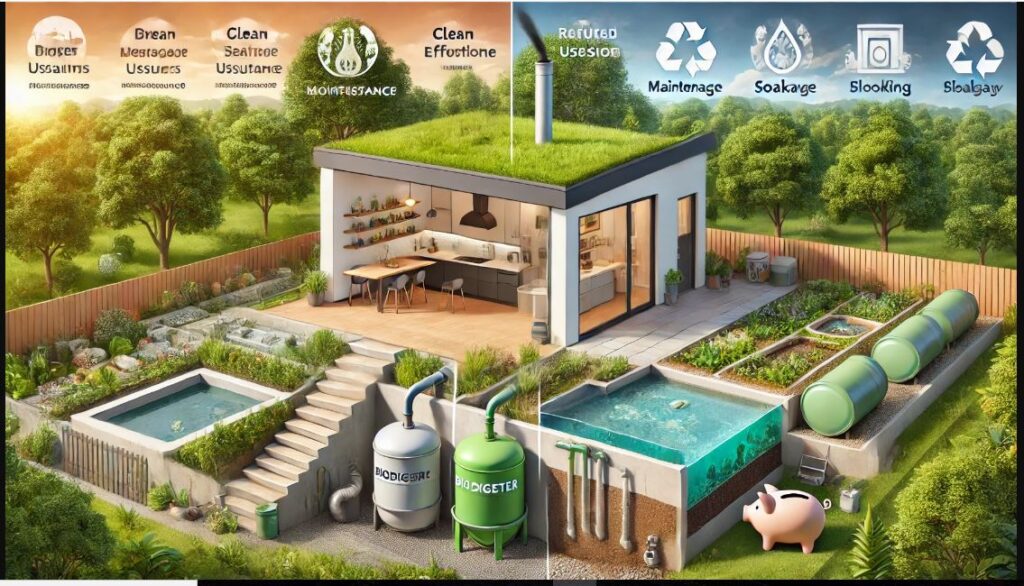
The environmental effects of biodigesters and septic tanks with soakaways differ considerably. Biodigesters are designed for waste treatment and resource recovery, making them a more sustainable option. In contrast, septic tanks primarily serve as waste storage systems and pose a greater risk of pollution. More analysis of this system includes:
1. Waste breakdown and treatment
Biodigester
Biodigestion, or anaerobic digestion, is a biological process in which microorganisms break down organic material without oxygen. As a result, it leaves little to no solid residue, thereby reducing sludge buildup and the need for frequent disposal. Furthermore, it is safe for irrigation and does not pollute underground water.
Septic tanks with soakaways
It is only practically broken down, leading to the accumulation of sludge.
Frequent elimination is required, which contributes to environmental degradation from waste disposal.
If not correctly designed, effluent seeps into the earth, potentially contaminating groundwater.
2. Gas emissions and climate impact.
Biodigester
They convert waste to clean energy by producing biogas (methane and carbon dioxide). It is used for cooking or electricity, reducing reliance on fossil fuels.
It helps reduce landfill waste, lowering greenhouse gas emissions.
Septic tanks with soakaways.
It releases untreated methane into the air, contributing to global warming.
Waste accumulates and is later dumped.
3. Maintenance and long-term sustainability.
Biodigester
It can last decades without requiring desludging.
Dependence on external waste disposal services is reduced.
It has a self-sustaining system with minimal maintenance needed.
Septic tanks with soakaways.
Waste in this system is often improperly disposed of, thereby contributing to environmental pollution.
Operation cost is increased due to regular draining or purging out (every 2-5 years).
Soakaway systems can fail over time, which leads to high costs of repairs and land degradation.
Cost analysis: Which of the systems saves more money in the long run?
Septic tanks appear cheaper upfront, but their high maintenance costs and benefits make them more expensive in the long run. While biodigesters are a smart financial investment. It helps you save your money on maintenance, cooking gas, and fertiliser while also increasing property value.
Now, let’s have a breakdown of their cost analysis.
1. Installation costs.
The cost of installing a biodigester varies due to its size and features.
For a larger system, it costs between ₦200,000 and ₦800,000 or more. Because it doesn’t need a soakaway, the extra expense is decreased.
However, depending on the size, installing a septic tank can cost varies from ₦150,000 to ₦500,000. It requires a soakaway pit, which might increase the costs, but it is less expensive to build.
2. Maintenance cost.
A biodigester requires little to no pumping; however, occasional checks and bacteria replenishment will cost ₦2,000-₦20,000 per year. On the other hand, septic tanks require desludging every 2-5 years, which can cost ₦50,000-₦200,000 per session. Moreover, any blockage in the septic tank and soakaway may result in expensive repairs or even complete reconstruction, costing ₦300,000 or more.
Comparison between biodigesters and septic tanks with soakaways.
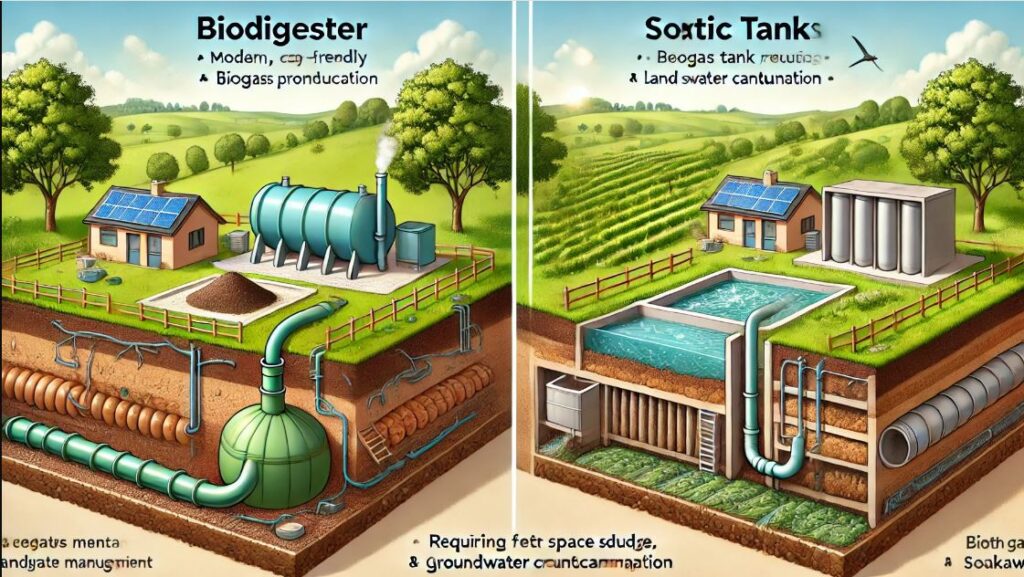
Here are the key differences between installing a biodigester and a septic tank with a soakaway:
1. Space requirement
A septic tank with a soakaway needs a larger soakaway than a biodigester, which is small and compact.
2. Environmental impact
Biodigesters are eco-friendly and do not contaminate groundwater, whereas septic tanks pose a risk of groundwater pollution.
3. Odour issues
Odour-free for biodigesters but produces foul smells for septic tanks and soakaway systems.
4. Suitability
A biodigester is used in urban areas, commercial buildings, and eco-homes. Septic tanks and soakaways are used in rural homes and large compounds.
5. Maintenance
A biodigester requires minimal or no frequent desludging, but a septic tank needs regular pumping.
For better visual understanding, you can check this video:
How to choose the best system for your property.
Three key factors come into play when deciding between a biodigester and a septic tank and soakaway. This includes space requirements, maintenance demands, and overall efficiency. The best system for your property depends on available land, long-term performance, and ease of maintenance.
In terms of space management, the septic tank and soakaway need more land and must be positioned away from buildings.
For stable maintenance, a biodigester needs very little care, completely decomposing waste into biogas and safe liquid byproducts. In contrast, septic tanks require regular sludge removal and soakaway upkeep, leading to increased costs over time.
Regarding efficiency, biodigesters protect groundwater from contamination, whereas septic tanks only provide partial waste treatment, which raises environmental hazards and reduces maintenance costs.
CONCLUSION
In summary, the choice between biodigesters vs septic tanks and soakaways should be based on your long-term goals, budget, and commitment to environmental sustainability. while septic tanks and soakaways may be more traditional, biodigesters offer a modern, eco-friendly solution with lower maintenance and better efficiency. By carefully weighing the advantages of biodigesters vs septic tanks and soakaways, you can invest in a waste management system that not only meets your needs today but also supports a cleaner, greener future.
If you’re still deciding between a biodigester septic tank soakaway system, your final choice should be based on budget, space, and long-term sustainability.
Are you ready to upgrade? Contact us today for expert guidance and professional installation. We will help you make a smart, sustainable choice for your home or business.


