

Bedroom positioning in residential design is a silent factor that directly influences comfort, privacy, and rest. However, many residential buildings look aesthetically pleasing yet feel uncomfortable inside due to poor bedroom placement. In most cases, the problem is not the furniture or finishes, but the way the bedrooms are positioned within the layout.
Where your bedroom is located in a building significantly affects noise levels, thermal comfort, and personal privacy. Unfortunately, this aspect of design is often overlooked in many Nigerian homes, leading to bedrooms that face excessive noise, harsh afternoon heat, or constant disturbance.
In this article, you will gain a clearer understanding of bedroom orientation in building design and why bedrooms should be placed away from public zones while also aligned for natural ventilation. As a result, this thoughtful approach transforms a house from merely functional into a truly comfortable home. Ultimately, good residential design begins with smart spatial planning.
BEDROOM POSITIONING AND NOISE CONTROL
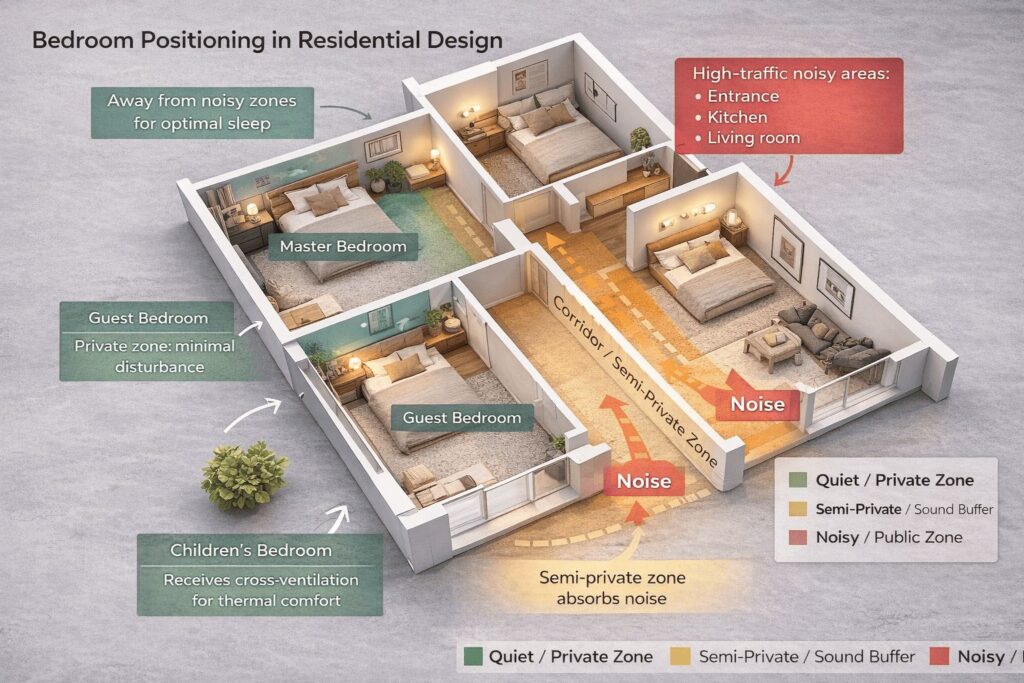
Architects carefully plan every space in a building according to privacy and noise levels. However, many residential houses still position bedrooms incorrectly, even though they should be quiet, restful spaces. Your bedroom should not be close to your kitchen, living room, main entrance, or staircase. This is because your everyday activities will disturb your rest, sleep, and privacy. Properly placed bedroom positioning separates private spaces from high-traffic and noisy zones within the building.
Also, in good bedroom orientation in building design, bedrooms are located deeper within the floor plan. They are away from public areas such as sitting rooms, dining spaces, and generators or service areas. This zoning approach significantly reduces sound transfer and improves comfort.
PRIVATE VS. PUBLIC ZONES IN RESIDENTIAL BUILDING LAYOUT.
Space zoning is very important in building, and in residential buildings, your spaces are divided into:
1. Quiet or private zone
2. Semi-quiet or semi-private zone
3. Noisy or public area zone
1. Quiet or Private Zone:
These are spaces meant for rest, personal activities, and restricted access. These spaces are meant for minimal noise and maximum privacy. Examples include the bedroom, master suite, prayer room, walk-in closet, and study room.
Bedroom orientations in building design are the most important of the private zone. They should therefore be positioned away from public spaces.
2. Semi-quiet or Semi-private Zone:
In well-planned homes, semi-quiet areas help absorb sound before it reaches the bedrooms. This zoning strategy is a silent but powerful noise-control tool in effective bedroom positioning. Examples include corridors, family lounges, staircases, and dining.
3. Noisy or Public Zone
These areas of the house support interaction, movement, and social activities. These spaces are accessible to visitors and usually experience higher foot traffic and noise levels. Examples include the living room, anteroom, entrance, and outdoor sit-out.
When architects consider noise control early in the design stage, bedroom positioning becomes a powerful tool for improving sleep quality, privacy, and long-term liveability. This shows that comfort is not accidental but carefully planned.
KEY THINGS TO CONSIDER BEFORE FINALISING BEDROOM PLACEMENT
In good residential design, architects deliberately position bedrooms based on noise control, zoning, orientation, and user lifestyle. Below are the most important factors to consider before finalizing bedroom placement in any building design.
1. Noise level and activity zones:
Avoid placing your bedroom directly beside high-activity areas. This area includes living rooms, kitchens, staircases, or generators. Proper separation reduces noise disturbance and improves sleep quality.
2. Bedroom orientation and natural ventilation:
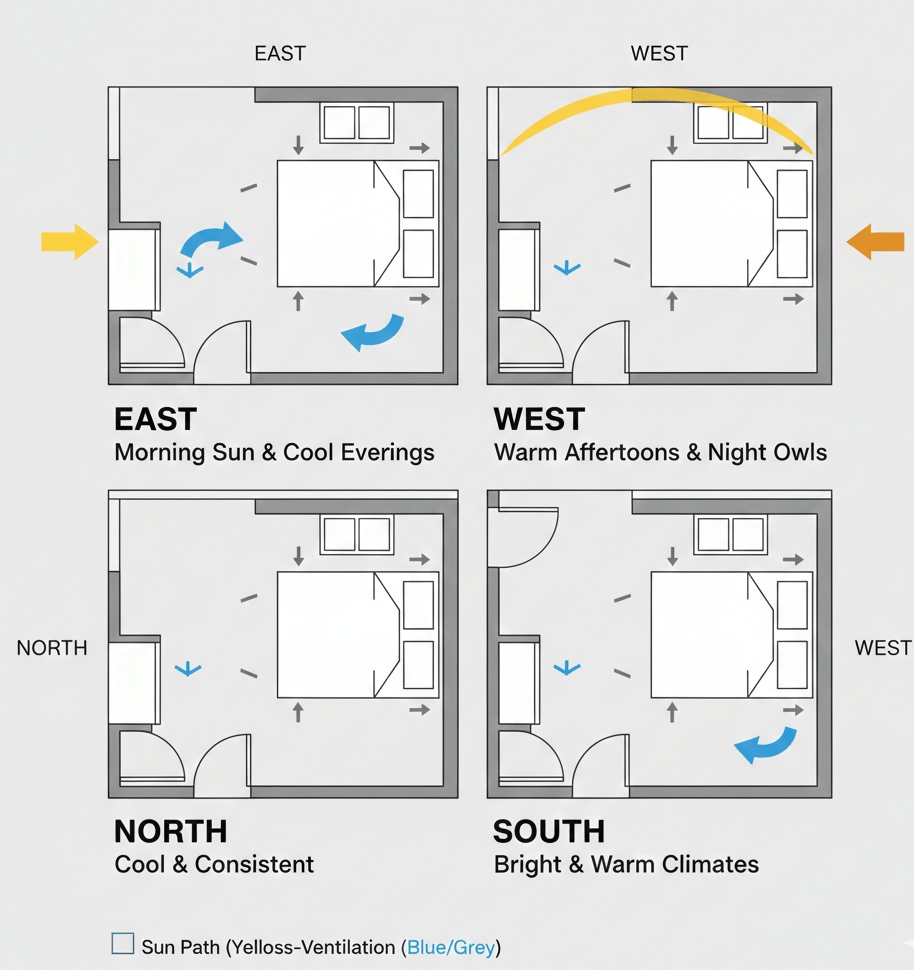
Additionally, bedroom orientation in building design affects airflow and thermal comfort. Design the bedroom to receive cross-ventilation for better airflow and comfort. This will help avoid excessive heat from the harsh afternoon sun, especially in the Nigerian climate. A good bedroom orientation helps to reduce artificial cooling.
3. Privacy between bedrooms:
Moreover, proper design should separate the master’s bedroom, guest rooms, and children’s rooms to maintain privacy between occupants.
4. Relationship to external noise sources:
Architects consider external factors carefully when planning bedroom placement. These factors include roads, neighbors, churches, mosques, and commercial activities. Bedroom positioning should be away from noisy facades.
5. Safety and security:
First, these factors are extremely important when finalizing bedroom placement in any residential building. Otherwise, poorly positioned bedrooms can expose occupants to security risks, especially in Nigerian environments. Additionally, bedroom placement must consider safety, including window orientation and proximity to public access points. In particular, careful planning ensures both privacy and security for all occupants.
How Architects Plan Bedroom Positioning: Privacy, Culture, and Religious Considerations
Architects plan bedroom positioning with careful attention to privacy, culture, and religious practices. They treat bedrooms as private zones and deliberately place them away from public areas. This separation reduces noise, limits visual exposure, and protects personal comfort.
Additionally, cultural practices influence bedroom orientation in building design. For example, frequent visitors or extended family stays often require architects to position guest bedrooms closer to public areas. However, architects place family bedrooms deeper within the layout to maintain privacy.
Moreover, religious considerations guide bedroom access and orientation. Architects account for modesty, gender separation where required, and quiet conditions that support prayer routines. To reinforce privacy, they use corridors, family lounges, and stair lobbies to create separation from public spaces.
CONCLUSION
In conclusion, bedroom positioning in residential design is a silent but powerful factor that determines comfort, privacy, and overall well-being in a home. Moreover, proper bedroom placement is never accidental; it results from careful planning that considers noise control, space zoning, safety, culture, and lifestyle. As a result, having a solid understanding of bedroom orientation in building design allows bedrooms to be positioned within quiet, private zones.
If you need professional guidance, we can help you plan bedroom positioning and residential layouts to create a home that is both comfortable and private, with thoughtful design from the start.


