
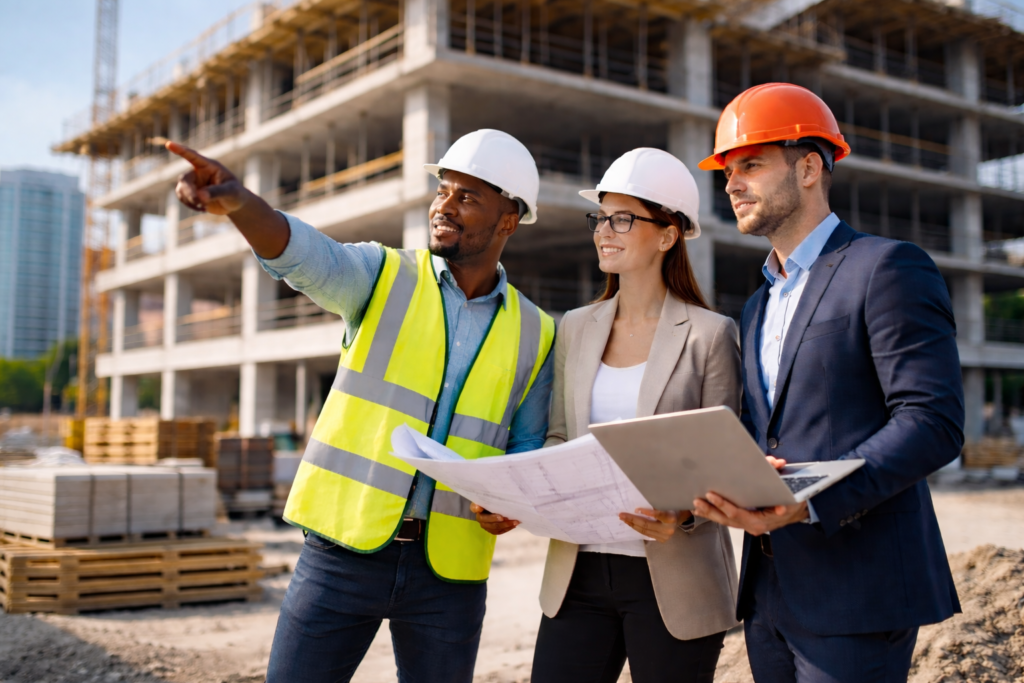
Building professionals in construction play a critical role in ensuring that every structure is safe, functional, efficient, and sustainable. A structure that is well constructed goes beyond just its walls, columns, beams, and roofs. It is an ideal balance of functionality, efficiency, and sustainability in perfect harmony. In the first part of this article, we had a clear understanding of the core professionals that are responsible for design, structure, and cost management. The requirement of having a well-designed house is more than just a solid foundation and a beautiful exterior. It requires proper ventilation, electrical systems, water supply, and interior functionality. This is where other key building professionals come in.
These professionals include MEP (mechanical, electrical, and plumbing) engineers, urban and regional planners, interior designers, environmental engineers, and estate surveyors. Therefore, in this part 2, we will discuss these experts who ensure that our buildings are not just constructed but truly livable, energy-efficient, and future-proof. Let’s dive in.
Essential experts in building construction (Part 2)
MEP (Mechanical, Electrical, and Plumbing) ENGINEERS.
The true functionality of a structure depends on the systems that support daily living. For this reason, MEP engineers are responsible for HVAC, electrical, and plumbing systems. For example, HVAC systems regulate indoor air quality and temperature to ensure comfort. In addition, proper ventilation helps prevent indoor air pollution.
Meanwhile, electrical systems provide safe wiring, lighting, and efficient power distribution. Furthermore, backup solutions such as generators and solar systems improve reliability. Similarly, plumbing systems manage water supply, drainage, and waste disposal. As a result, leak-proof piping prevents water damage and contamination.
URBAN AND REGIONAL PLANNERS
They are responsible for designing and managing land use, ensuring that buildings, roads, and infrastructure are well organized to support both present and future needs. In terms of land planning, they allocate space for residential, commercial, industrial, and recreational purposes. They also promote sustainable land development to accommodate future growth. In terms of environmental and sustainability planning, they ensure that the implementation of urban and regional planners implement waste management and drainage policies to ensure compliance. They also ensure there is accessibility to essential services like schools, hospitals, and markets. They provide us with good road networking so as to reduce traffic congestion and improve pedestrian-friendly spaces.
Without proper urban planning, cities and towns can become overcrowded, disorganized, and prone to infrastructure failure. Poor planning can lead to traffic congestion, inadequate drainage, environmental degradation, and unlivable conditions.
INTERIOR DESIGNERS
The primary purpose of an interior designer is to transform spaces into functional and aesthetic masterpieces. They go beyond decoration by ensuring that interiors are well-planned, optimized for use, and aligned with the needs and preferences of the occupants. Having good interior design will boost productivity, enhance mood, and improve the overall experience of any space—whether it’s a home, office, hotel, or commercial building. Poorly designed interiors can make a space feel cramped, uninviting, or inefficient.
ENVIRONMENTAL ENGINEERS
The role of an environmental engineer is to safeguard the planet through sustainable construction. As cities expand and construction projects rise, the need for environmentally responsible development becomes more urgent. Environmental engineers play a vital role in ensuring that buildings and infrastructure projects minimize environmental harm, conserve resources, and promote sustainability. The key responsibilities of environmental engineering include waste management and pollution control, water supply and drainage systems, and energy efficiency and sustainable building practices.
Environmental engineers ensure that in waste management and pollution, environmental engineers ensure compliance with environmental laws and sustainability standards. They also design clean water supply and waste management treatment systems that promote water conservation in residential and commercial buildings.
ESTATE SURVEYORS
Without estate surveyors, real estate investments can suffer from inaccurate valuations, poor management, legal disputes, and financial losses. This building professional ensures that properties are profitable, legally secure, and efficiently managed. Their key responsibilities include property valuation and investment advisory, estate and facilities management, and land administration and real estate transactions.
Estate surveyors help to determine the market value of land, buildings, and commercial properties. They also conduct feasibility studies for property development. Another feature is that they oversee the maintenance and operation of residential, commercial, and industrial properties. In terms of land administration, they help to handle property sales, leases, and acquisitions. They also help to assist in dispute resolution over property ownership and boundaries.
Why Building Professionals in Construction Are Important
Without building professionals in construction, projects are more likely to suffer from design flaws, safety risks, and costly construction errors. Each building professional ensures that buildings are not just built but are also safe, valuable, efficient, and sustainable. The following are why these professionals are crucial in construction.
Preventing design flaws,
Avoiding structural weaknesses,
Controlling costs and financial losses,
Ensuring proper land use and soil stability,
Enhancing interior functionality and aesthetics,
Preventing environmental hazards, and
Managing real estate value and investment.
CONCLUSION
Every building professional should be engaged at every stage of construction, and it’s crucial to engage the qualified ones. It doesn’t matter if you are a homeowner, developer, or investor; their involvement protects your investment and ensures a safer and smarter future. Engaging qualified building professionals in construction at every stage of development guarantees long-term value, safety, and sustainability. Neglecting these experts can lead to design flaws, structural failures, financial losses, and poor liveability.
If you’re embarking on a construction project and need the right professionals to guide you, reach out to us today. Together, we can turn your vision into a well-planned, expertly executed, and future-proof reality.


